Career Mapping & Career Coaching
Career Exploration | Career Change Strategy
Professional Development Planning | Myers-Briggs Strong Interest Inventory®
Career Mapping, Career Coaching, & Career Assessment Services: Career Changes and Career Launches
Turn Career Uncertainty Into a Clear, Research-Backed Plan
You know something needs to change.
You may be just starting your career and unsure which direction to pursue. You may be considering a new role, a different industry, greater earning potential, more meaningful work, consulting, self-employment, or a complete career change.
You may also be navigating a layoff or outplacement, closing a business, returning to the workforce, or realizing that your current field is shrinking and you need to identify where your experience can create value next.
The difficult part is figuring out which direction actually makes sense.
Through Houston Outplacement LLC, Career Mapping, Career Coaching, and Career Assessment Services, Bridget Batson combines career assessment, one-on-one strategy, professional history, transferable skills, current market research, emerging-career exploration, and personalized career-path analysis to help you identify realistic opportunities and build a practical plan for pursuing them.
For some clients, that means identifying a first career direction.
For others, it means uncovering entirely new career paths they had never considered (including emerging careers so new they may not have even heard of them) while evaluating growing industries, researching emerging roles, or finding the shortest credible bridge from an existing career into something with stronger long-term potential.
Rather than simply asking “What job would I enjoy?”, we look at a much bigger question:
Where can your interests, experience, strengths, and existing career capital create the greatest opportunity next?

What is Career Mapping?
Career Mapping is a strategic career-planning process used to identify potential career directions, evaluate their viability, and create a practical roadmap for moving from where you are today to where you want to go.
Unlike traditional career counseling that may focus primarily on interests or job titles, my Career Mapping process considers the whole professional picture.
That may include your:
CAREER INTERESTS
Professional Experience
PERSONAL MOTIVATORS
TRANSFERABLE SKILLS
INDUSTRY OPPORTUNITIES
EDUCATION
PROFESSIONAL DEVELOPMENT NEEDS
MARKET DEMAND
LONG-TERM CAREER GOALS
POTENTIAL CAREER PATHS
ACCOMPLISHMENTS
EMERGING CAREERS
PROFESSIONAL STRENGTHS
WORK PREFERENCES
LEADERSHIP PREFERENCES
COMPENSATION EXPECTATIONS
LIFESTYLE PRIORITIES
CAREER GAPS AND BARRIERS
PROFESSIONAL REBRANDING
NETWORKING STRATEGY
Then we go beyond self-reflection and investigate what is actually happening in the market.
WHO BENEFITS FROM CAREER MAPPING
CAREER CHANGERS
STUDENTS AND RECENT GRADUATES
MID-CAREER PROFESSIONALS
EXECUTIVES & LEADERS
Entrepreneurs & Consultants
RETURNING PROFESSIONALS

Career Mapping Answers More Than “What Job Should I Do?”
A career assessment can provide valuable insight into interests, occupational themes, and work preferences.
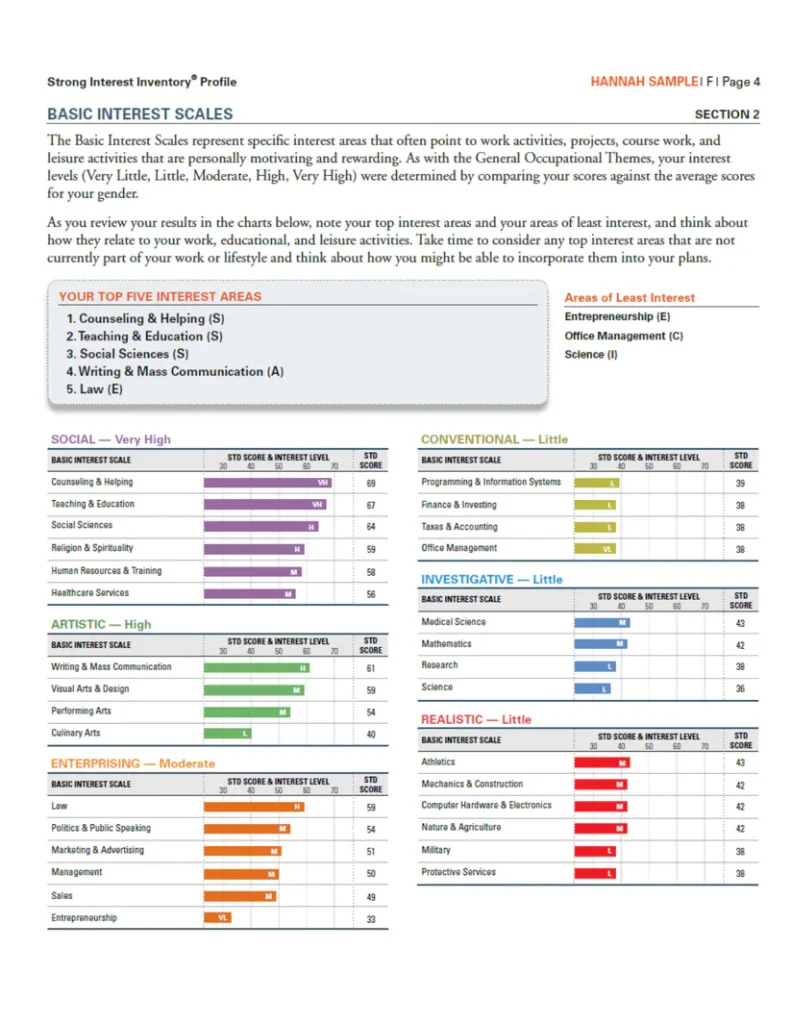
The Strong Interest Inventory® may identify occupations whose interest patterns are similar to your own. Those results can be an excellent starting point for career exploration.
Career Mapping then places those results into the broader context of your professional history, education, experience, accomplishments, compensation expectations, and long-term goals.

The Houston Outplacement Career Mapping Method
1. Assess
Identify career interests, professional preferences, motivators, priorities, and areas of dissatisfaction.
2. Translate
Interpret those patterns through your actual career history, experience, accomplishments, education, and professional level.
3. Research
Investigate relevant occupations, industries, emerging opportunities, compensation, growth, qualifications, and market conditions.
4. Evaluate
Compare potential directions based on fit, opportunity, earning potential, accessibility, and long-term potential.
5. Bridge
Identify what may be needed to move from your current career into the target direction.
This could include:
- Education
- Certifications
- New skills
- Industry knowledge
- Networking
- Project experience
- Volunteer leadership
- Consulting
- Thought leadership
- Professional associations
6. Position
Determine how your existing experience can be reframed so employers and professional contacts understand your relevance to the new field.
7. Map
Create practical next steps to test, pursue, and ultimately move toward your preferred career direction.
Myers-Briggs Strong Interest Inventory® in Career Mapping
Career Mapping sessions may incorporate the Myers-Briggs Strong Interest Inventory® (SII), one of the most respected career assessment tools available.
The Strong Interest Inventory helps individuals better understand their interests, preferences, and potential career matches through decades of research-based analysis.
The assessment may provide insight into:
• Career interests
• Occupational themes
• Educational pathways
• Work preferences
• Professional motivators
• Potential career matches
For many clients, the Strong Interest Inventory serves as a valuable starting point for deeper career exploration and planning.
Career Mapping Is Based on Both You AND the Market
A Career Can Sound Interesting and Still Be the Wrong Move
Interest alone is not enough.
A career may appear appealing but require years of education, pay substantially less than expected, have limited opportunities in your market, or fail to use the professional capital you have spent years building.
That is why Career Mapping can incorporate current career and labor-market research.
Depending on your goals, your personalized analysis may include:
- Representative job titles
- Alternative and adjacent career paths
- Emerging occupations
- Target industries
- Potential employers
- Compensation ranges
- Projected occupational or industry growth
- Required and preferred qualifications
- Degrees and educational requirements
- Certifications and credential options
- Professional-development courses
- Skills gaps
- Professional associations
- Networking channels
- Search firms and recruiting resources
- Market-entry strategies
- Professional positioning recommendations
- 30-, 60-, 90-, or longer-term action steps


Find the Shortest Credible Bridge
You Don’t Need to Start Over
One of the biggest fears associated with career change is the assumption that changing direction means throwing away years of experience.
Often, it does not.
A major part of Career Mapping is identifying the shortest credible bridge between what you have already done and where you want to go next.
That may involve identifying:
- Adjacent industries
- Similar business problems
- Transferable leadership experience
- Relevant technical knowledge
- Existing professional relationships
- Functional similarities
- Short-term education
- Certifications
- Consulting opportunities
- Internal projects
- Volunteer leadership
- Board involvement
- Thought leadership
The objective is to determine where your existing career capital becomes valuable next.
Career Light
-
Iindividualized coaching using the Strong Interest Inventory® to help you better understand your interests and identify broad career directions for further exploration.
-
30-Minute Career Coaching Session
-
Strong Interest Inventory® Assessment
-
Personalized Interpretation & Career Direction
Career Mapping
-
Individualized coaching using the Strong Interest Inventory® to identify realistic career directions, target roles, transferable skills, and a focused next-step strategy.
-
60-Minute Career Coaching and Strategy Session with Career Direction, Target Roles, Job Search Focus, and Transferrable Skills
-
Strong Interest Inventory® Assessment
-
Personalized Career Direction Based on Your Interests, Experience & Transferable Skills
Career Mapping & Transition Blueprint
-
Individualized coaching, assessment insights, and personalized career analysis to identify realistic career paths and build a clear strategy for making the transition.
-
Initial Discovery Session
-
Strong Interest Inventory® Assessment
-
2, 60-Minute Career Strategy Sessions
-
Personalized Career Paths
-
Emerging Careers and Industries
-
Compensation & Market-Growth
-
Education / Certification Recommendations
-
Career Gap & Bridge Strategy
-
Professional Action Roadmap and Rebranding Strategy
-
$100 Credit on a Resume Writing Package
Career Mapping and Career Coaching for Career Changers
You know you no longer want what you currently have, but you are not sure what should replace it.
Career Mapping can help identify realistic alternatives, evaluate transferable skills, explore different industries, and build a strategy for transitioning without making an impulsive move.
Career Mapping for Mid-Career Professionals
Career uncertainty often becomes more complicated after 10, 15, or 20 years in the workforce.
You may have:
- Significant compensation to protect
- Family responsibilities
- Specialized experience
- A professional reputation
- Strong industry relationships
- A lifestyle you do not want to sacrifice
At this stage, the question is rarely simply:
“What do I like?”
It is:
“What can I move into without unnecessarily abandoning everything I have already built?”
Executive Career Mapping
Your Next Chapter May Look Completely Different
Executives and senior professionals often reach a point where the traditional next promotion is no longer the only option.
Career Mapping can help evaluate opportunities such as:
- Executive leadership in another industry
- Consulting
- Fractional leadership
- Entrepreneurship
- Advisory work
- Board service
- Private equity or portfolio-company leadership
- Nonprofit leadership
- Teaching
- Executive-in-residence roles
- Professional speaking
- Writing and thought leadership
- Independent practice
- Second-career opportunities
For senior professionals, the objective is often to find a direction that preserves professional capital while creating greater meaning, flexibility, opportunity, or earning potential.
Career Mapping for Entrepreneurs & Consultants
Self-employment creates its own career questions.
You may be considering:
- Starting a consulting practice
- Expanding an existing business
- Returning to corporate employment
- Moving into fractional work
- Developing an advisory practice
- Monetizing specialized expertise
- Building a portfolio career
Career Mapping can help evaluate which direction best fits your experience, interests, financial goals, and preferred lifestyle.
Career Mapping for Students & Early-Career Professionals
Career Mapping can also help students and recent graduates make more informed choices about:
- College majors
- Graduate education
- Career direction
- Internships
- Professional development
- Industry selection
- Entry-level career paths
The earlier someone understands the relationship between interests, career environments, and market opportunities, the more intentionally they can build experience.
Career Mapping for Returning Professionals
Returning to work after time away can create uncertainty about where your previous experience fits into today’s market.
Career Mapping can help professionals returning after:
- Caregiving
- Entrepreneurship
- Military service
- Education
- Retirement
- Health or family-related career breaks
- Extended unemployment
Identify viable re-entry strategies and determine how to position previous experience for current opportunities.
Emerging Careers & Growing Industries
Your Best Next Career May Not Have Existed 10 Years Ago
AI, technology, healthcare innovation, demographic changes, new regulations, shifting consumer behavior, new business models, and economic transformation continue to create new occupations and reshape existing ones.
Career Mapping can include research into emerging opportunities that allow you to combine existing expertise with growing areas of the economy.
Instead of asking only:
“What jobs have I done before?”
we may also ask:
“Where could this experience become MORE valuable over the next five to ten years?”
Why Work With Bridget Batson?
Career decisions can affect your income, professional identity, lifestyle, future opportunities, and long-term satisfaction. Career Mapping is designed to help you evaluate those decisions from both a personal and market perspective.
Bridget Batson brings together career strategy, recruiting experience, personal branding, resume development, interview coaching, and labor-market research. She is a certified Strong Interest Inventory® interpreter and a Certified Career Resilience Strategist (CCRS).
Her approach considers your interests, experience, transferable skills, accomplishments, compensation expectations, professional goals, and work preferences alongside current market conditions. Research may include career growth, emerging opportunities, industry demand, compensation, education and certification requirements, potential employers, and barriers to transition.
Each engagement is highly individualized. Bridget works one-on-one with clients to explore potential directions, evaluate which opportunities make sense for their background and goals, identify practical ways to bridge gaps, and develop a strategy for moving forward.
The result is a personalized career roadmap built around your experience, your priorities, and the opportunities available in today’s market.
Bridget Batson is a career coach and resume writer, as well as a former Fortune 500 recruiter. She is based in Houston, TX, and works with clients across the United States.

What is Career Mapping?
Career Mapping is a strategic career-planning process that helps individuals evaluate their interests, experience, transferable skills, goals, market opportunities, and potential career paths so they can make informed decisions about what to pursue next.
Is Career Mapping the same as career coaching?
Career Mapping is a specialized form of career coaching focused on career direction, opportunity evaluation, market research, and long-term strategy.
What does a Career Mapping engagement include?
Depending on the client’s needs, Career Mapping may include a Strong Interest Inventory® assessment, one-on-one strategy, professional-history analysis, career-path research, compensation and growth information, education and certification research, career-gap analysis, professional positioning recommendations, and an action roadmap.
What is the Strong Interest Inventory®?
The Strong Interest Inventory® is a well-established career-interest assessment that helps individuals understand patterns in their interests, occupational themes, and work preferences. It can be a valuable starting point for career exploration and planning.
Do I need to take the Strong Interest Inventory®?
No. Career Mapping can be completed with or without the assessment. For many clients, the Strong provides helpful additional insight that can be incorporated into the broader career-planning process.
How is the Strong Interest Inventory® used in Career Mapping?
When included, Strong results are reviewed alongside your professional history, goals, transferable skills, experience, and career interests. The assessment provides another layer of information that can help guide career exploration and discussion.
Can Career Mapping help me change careers?
Yes. Career Mapping can help identify transferable skills, adjacent industries, emerging opportunities, development needs, and realistic paths for moving into a new direction.
Can Career Mapping help experienced professionals and executives?
Yes. Career Mapping can be especially useful for professionals with significant experience who want to explore a new industry, consulting, fractional leadership, entrepreneurship, nonprofit work, advisory roles, or another next-stage career path without unnecessarily discarding the value of what they have already built.
Can Career Mapping help someone who is just starting their career?
Yes. Career Mapping can help students, recent graduates, and early-career professionals evaluate interests, career options, education choices, and possible paths before committing to a direction.
Can Career Mapping help me if my industry or role is changing?
Yes. Career Mapping can help evaluate where your existing experience may transfer, identify growing or emerging areas, and explore whether additional skills, training, or repositioning could open new opportunities.
Can Career Mapping help me start a consulting business or become self-employed?
Yes. Depending on your goals and experience, Career Mapping may include exploration of consulting, self-employment, fractional work, advisory services, and other independent career models.
Can you help me decide whether I need another degree or certification?
Yes. Career Mapping can include research into degrees, certifications, licenses, courses, and professional-development options related to your target career.
Do you research compensation and career growth?
When relevant, Career Mapping may include compensation information, projected occupational or industry growth, market trends, and other career-market considerations.
Do you research emerging careers?
Yes. Depending on your goals, Career Mapping may explore emerging occupations, growing industries, and newer career paths that could align with your experience and interests.
Does Career Mapping include resume writing?
No. Career Mapping focuses on career direction and strategy. Resume, LinkedIn, and personal-branding services can be completed separately once your target direction is established.
Should I complete Career Mapping before having my resume written?
If you are genuinely uncertain about your target direction, Career Mapping may be the better first step. It is much easier to build a strong resume and professional brand once you know what you are positioning yourself toward.
Contact Houston Outplacement LLC to discuss your goals and determine the best option for your situation.